Field vs Show Golden Retrievers: Is There a Difference?
Field Vs. Show Golden Retriever’s. These are words thrown around a lot in the Golden Retriever world, web searches and social media sites. So let’s talk about what this actually means.
Now I’ll be upfront here I’m a bit biased as I have field bred goldens so take that into account when you read the following.
Does it really mean anything?
Yes, and No.
They are both Golden Retrievers. However, what has changed between your classic show golden and your classic field golden is WHY they are bred.
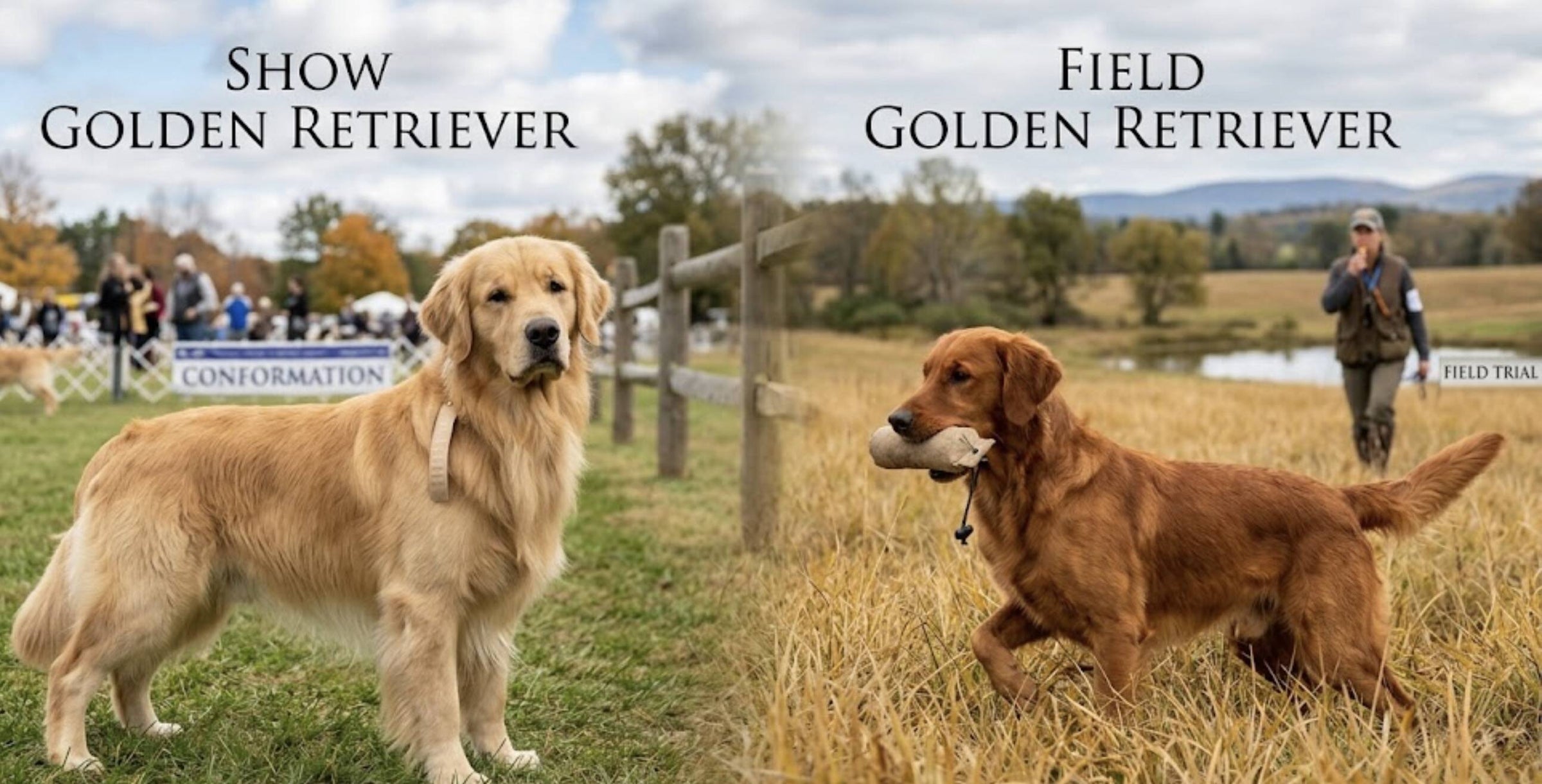
Show goldens (often lighter colored) are bred for the show ring in mind. Ideally this means that they’ve kept the characteristics the Golden Retriever breed and focus on temperament and conformation. However, in reality it also means show goldens will typically be bred to be easier to handle in a conformation show ring.
This means show breeders typically choose temperaments that are calmer, less energetic and sometimes longer of hair and boxier of build. If it’s a trait winning in the show ring, they are traits show breeders will usually prioritize. There is nothing inherently wrong about this. These dogs are filling the roll their breeders want and as well as their clients. This doesn’t make them a bad Golden Retriever, it just makes them different from their hunting counterparts (usually).
If you’ve ever watched the Westminster dog show you can see what they need to accomplish in the show ring to win.
Now go watch a hunting field trial and see what field goldens need to accomplish. The goals are very different.
Field goldens (often red or darker goldens) are dogs bred for their ability to seek out and retrieve small game and birds, have a soft mouth to hold those birds without crushing them and maintain their ease of training, coupled with the stamina to potentially work long hours in various weather conditions. They were originally bred for this purpose in Scotland around the 1860’s.
Modern field goldens have been bred to maintain these qualities. Often times their coats are shorter, shed water quicker and most importantly they have higher energy requirements and higher prey drive. They are still super loving and sweet dogs and they should have good “off switches” when they aren’t in the field, but This can catch people off guard when they have seen goldens on social media and suddenly their golden is NOTHING like what they’ve seen. (Side note: Please don’t compare yourselves or your dogs to social media videos and pictures!)
This is also why many Search and Rescue dogs are typically the field goldens. They maintain the drives necessary to excel in that lifesaving and wonderful field.
Many service dogs come from both sides of the spectrum but the goldens that need to be more involved, such as retrieving items, always “on” as they detect curtain ailments (like diabetic dogs) and detection dogs for federal and state services, ect. tend to do better with field bred golden’s because they have the inherent energy needed to maintain that constant alertness.
These dogs are typically of the “red” variety or darker coated goldens though that is a gross generalization and a golden of any color can exhibit these traits.
What about English creams/white goldens?
I lump these guys into the “show” dog category, as they were specifically bred for their lighter coat and calmer attitudes for the show rings in the UK and Russia. Though I’m sure there are many that would love to work.
Is there cross over?
Absolutely! There are show goldens that are inherently energetic and can easily and happily hunt and retrieve. There are field goldens that would loooove to be nothing more than couch potatoes.
The biggest difference between show and field goldens is the intent behind what they were bred for by their breeder and what qualities that breeder was looking for to emphasize and reproduce.
At Legacy Ranch we pick our breeding dogs to be great all round active companions that loves people, and have enough energy, intelligence and workability to be service dogs and hunting dogs. We are constantly analyzing our litters and lines ton push our program in the directions we want to go in.
What do we breed for?
We skew our lines towards service dogs as we wants to produce dogs for fellow veterans and first responders that may need a service dog to deal with the conditions inherent in their career field that they later have to learn to manage. These same dogs also have what’s needed to be great hunting dogs and active companions.
At the end of the day you can’t go wrong with a Golden Retriever but please do the research into what specifically YOU want from your golden and can handle with your work and living arrangements. Talk to the breeders you’re interested in to see what their specific program is geared towards and if their dogs will likely meet your criteria.
I’ll also toss in here, how you train and work with your dog is just as important if not more so than the dogs bloodlines and what their breeder bred them for. Bad or non-existent training can wreck even the best puppy and great training can create a wonderful dog from even the most shy and environmentally sensitive puppy.
Every breed has ideals, but every breeder has traits they prioritize over others and every person handles their dogs differently! Which ever way your lean towards, there will be a Golden Retriever for you. Just don’t forget to put in the work to train your puppy! Genetics can only take you so far.
Happy trails!
Written by Lindsey with over 15 years experience as a dog trainer, instructor, handler and breeder.